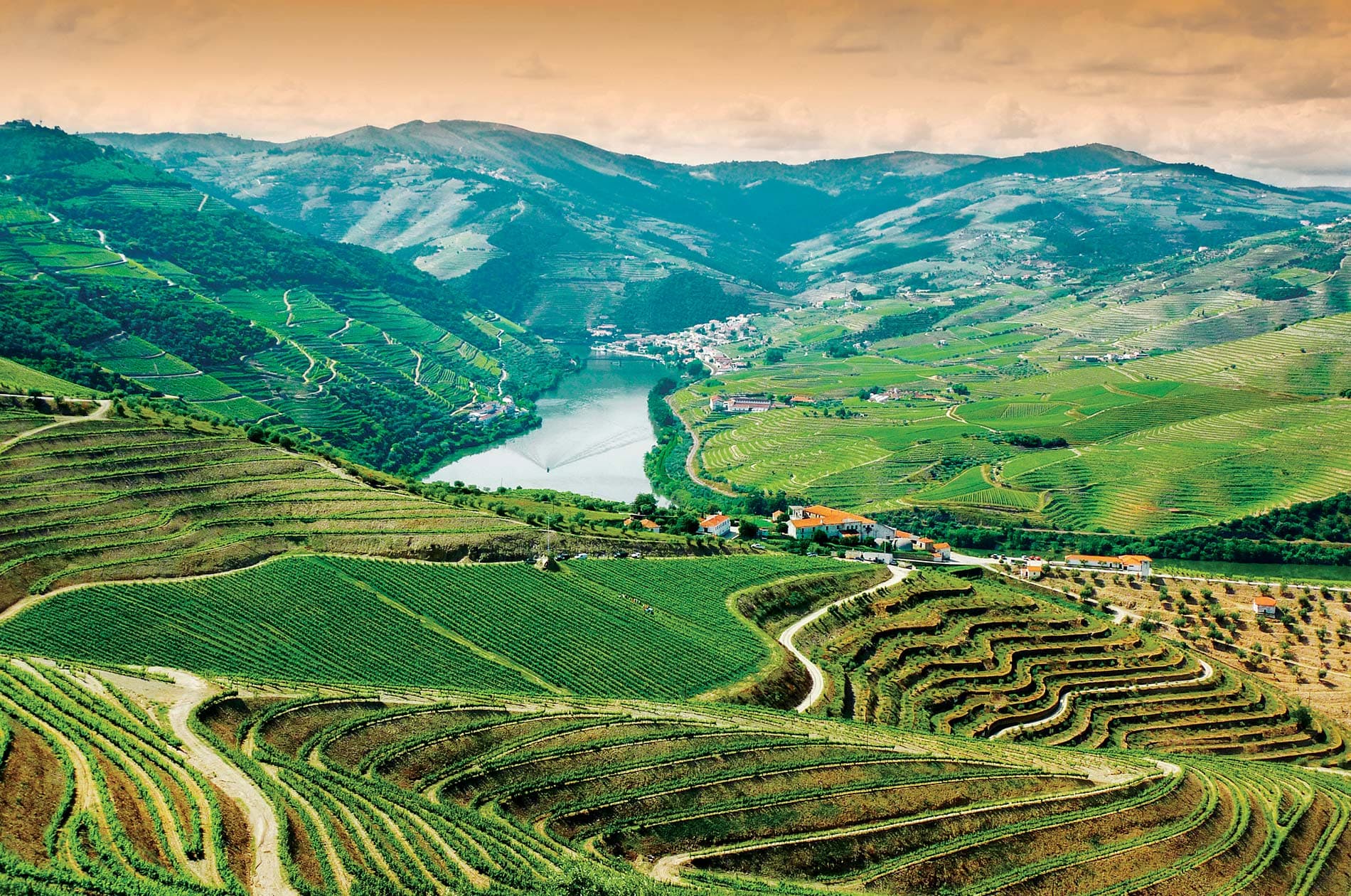
There is a moment, somewhere between Régua and Pinhão, when the road climbs above the river and the valley opens below you in its full impossible geometry — row upon row of vines cut into the schist like the work of a civilisation that decided to farm a cliff — and you understand, finally, why people come here and never quite leave. The Douro Valley does not announce itself the way the Algarve does. It earns you, slowly, on a road you weren't expecting to be beautiful.
Most visitors to Portugal encounter the Douro as a postcard. They take the scenic train from Porto to Pinhão, photograph the river from the window, and return to the city by evening. That experience is not wrong — the train journey is genuinely extraordinary — but it is a little like visiting Florence and only seeing the Duomo from the taxi. The Douro Valley is not a view. It is a place. And to understand it properly, you need to stay inside it.
PrimeStays has been working through the Douro Valley's stays with the same logic we apply everywhere: not the most famous, not the most marketed, but the ones that actually deliver the experience the landscape promises. What follows is our honest assessment of what the region offers, who it is for, and where — specifically — to sleep.
A Landscape Built by Human Hands
The Douro Valley stretches roughly 200 kilometres east from Porto into the Spanish border, following the Douro River through three distinct sub-regions: the Baixo Corgo, the wetter, greener western reaches closest to Porto; the Cima Corgo, the heart of the valley and home to the most celebrated quintas; and the Douro Superior, the arid, almost Castilian eastern reaches where the river widens and the heat becomes serious.
The terraces — the socalcos — are the defining feature. They were cut by hand over centuries, some dating to Roman occupation, and they represent one of the most sustained acts of agricultural labour in human history. The schist rock that underlies the entire valley retains heat during the day and releases it at night, creating the precise thermal conditions that make Douro wines — Port and the increasingly serious table wines — unlike anything produced anywhere else.
What surprises most first-time visitors is the silence. The Douro Valley is three hours from Lisbon by road, two from Porto, and yet it operates at a pace that feels genuinely pre-industrial. The villages are small. The roads are narrow. The evenings, particularly in September during harvest, have a quality of light that painters have been attempting to capture for two centuries — amber, then rose, then a deep bronze that settles over the river like something applied deliberately.
"The Douro does not ask you to admire it. It asks you to slow down enough to notice what is actually in front of you — which turns out to be rather a lot."
José Graça · PrimeStaysThe Question of Timing
The Douro Valley has a clear hierarchy of seasons, and understanding it changes the entire character of a visit.
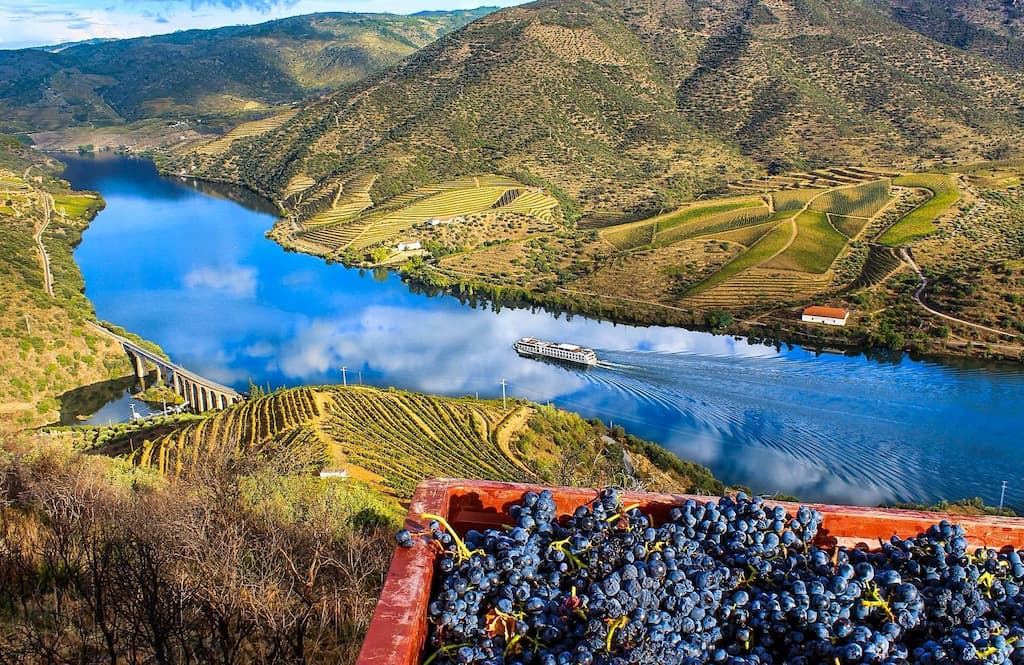
September and October are the months the valley exists for. The vindima — the harvest — transforms the quintas into working estates, with pickers moving through the terraces from dawn and the air carrying the particular sweetness of crushed grapes. Staying at a quinta during harvest is not a tourist activity. It is a genuine immersion in a process that has continued, with variations, for a thousand years. Temperatures are warm but not brutal. The light is at its most theatrical. And the wine being made around you is the wine you will be drinking for the next decade.
May and June are the second-best option — the vines are green and full, the river is high from spring rains, and the valley has not yet reached the extreme heat of July and August. Accommodation is easier to find and prices are lower.
July and August are possible but demanding. Temperatures in the Douro Superior regularly exceed 40°C, and even the Cima Corgo can be genuinely punishing in the middle of the day. The quintas with good pools and shaded terraces manage it well. The villages, less so.
Winter is the Douro's best-kept secret. The valley empties almost entirely, the light turns silver, and the bare vines reveal the full architecture of the terraces. Several quintas remain open and offer dramatically reduced rates. It is cold at night, occasionally foggy, and completely without pretension — which, for a certain kind of traveller, is precisely the point.
The Quintas: What They Are and What to Expect
The word quinta means, literally, a farm. In the Douro, it has come to mean something more specific: a wine estate, usually with a manor house at its centre, surrounded by working vineyards, with a cellar where the wine is made and aged. Staying at a quinta is not the same as staying at a hotel. It is staying at someone's property — a property that has been producing wine for generations — and the experience is shaped by that fact.
The best quintas offer what no hotel in the Douro can replicate: context. You wake up surrounded by the vines that produce the wine on your dinner table. The person who pours your wine at breakfast may be the same person who made it. The view from your terrace is the view the owners have been looking at for their entire lives, and they know every feature of it — which parcel ripens first, where the river bends, what the light does at five in the afternoon in October.
Not all quintas are equal. Some have invested seriously in accommodation — proper ensuite rooms, pools, restored manor houses with the kind of attention to detail that justifies serious rates. Others offer comfortable but modest guestrooms where the focus is entirely on the wine experience rather than the stay itself. PrimeStays has tried to be honest about the distinction, because they suit different travellers.
Pinhão, Régua, Lamego: Three Different Douroes
Pinhão is the village most associated with the valley's romantic idea of itself — a small station on the river decorated with azulejo panels depicting the harvest, a handful of restaurants, and an atmosphere that feels preserved rather than curated. It is the best base for walking the quintas of the Cima Corgo and for boat trips on the river. Accommodation in Pinhão itself is limited but improving; the best option is usually to stay at a quinta within driving distance and use the village as an anchor.
Peso da Régua is the valley's commercial centre — larger, less immediately charming, but with better infrastructure and access to the wine caves and tasting rooms of the major Port houses. The Museu do Douro is genuinely excellent. Régua also has the advantage of being on the main railway line, making it accessible without a car — though a car transforms the experience entirely.
Lamego deserves more attention than it receives. Set back from the river in a valley of its own, with a famous Baroque sanctuary — Nossa Senhora dos Remédios — climbing a hillside in a staircase of granite and azulejo, Lamego is the region's most complete town. It has good restaurants, a historic centre that rewards walking, and proximity to some of the valley's finest quintas. It is also the home of Raposeira, Portugal's best sparkling wine — a detail the locals mention with quiet pride.
"A quinta stay gives you what no hotel can: the context of a place that has been producing the same wine for generations, where the view from your terrace is the view the owners have been looking at their whole lives."
José Graça · PrimeStaysBeyond Port: The New Douro
The Douro Valley is changing. Port remains the foundation — the wine that built the terraces, funded the quintas, and created the infrastructure that makes the valley what it is — but the story of the last twenty years is the rise of the Douro's unfortified table wines. Wines made from the same indigenous grape varieties — Touriga Nacional, Touriga Franca, Tinta Roriz, Tinta Barroca — but vinified without the addition of brandy that characterises Port.
These wines — red and, increasingly, white — have established the Douro as one of the most serious and original wine regions in the world. They are not cheap. The combination of low yields forced by the schist soils, the difficulty of harvesting on terraces, and the growing international recognition means that the best Douro table wines now trade at prices that rival Burgundy. But they are extraordinary — dense, complex, with a minerality that comes directly from the rock beneath the vines.
For the traveller, this means that wine tourism in the Douro has become genuinely sophisticated. The best quintas offer tastings that go far beyond the standard tour-and-sample format: vertical tastings of multiple vintages, cellar tours that explain the philosophy behind the winemaking, and meals designed specifically to show what the wines do with food. Our Douro Valley destination page lists the quintas we consider essential for serious wine travellers.
Why the Douro Matters Now
The Douro Valley is at an interesting inflection point. International wine media has been paying serious attention for a decade, and the result is a slow but steady increase in the kind of traveller the region historically did not attract: Americans and Brits who come specifically for the wine, who have done their research, and who want to stay in places worthy of the landscape rather than the nearest town with a hotel bed.
Infrastructure is improving. Several quintas have invested seriously in accommodation in the last five years, and the quality gap between what was available a decade ago and what exists now is significant. There are still relatively few places that combine genuine wine experience with accommodation at the level the market expects — which is, from an editorial perspective, precisely what makes the region interesting. The best options are not yet widely known. The discovery window remains open.
The comparison with Tuscany — which the Douro Valley resembles in its landscape and its wine culture, if not its fame — is instructive. Tuscany took thirty years to develop the agriturismo infrastructure that now supports millions of visitors annually. The Douro is at the beginning of that curve, with the advantage of a wine culture that is, if anything, more historically rooted and a landscape that is, in its terraced drama, more visually extraordinary. The travellers who come now — and stay properly, at a quinta, for three or four nights — will be telling people about it for years.
every fortnight.
Editorial picks, honest notes, new destinations before they go mainstream.
Join the list