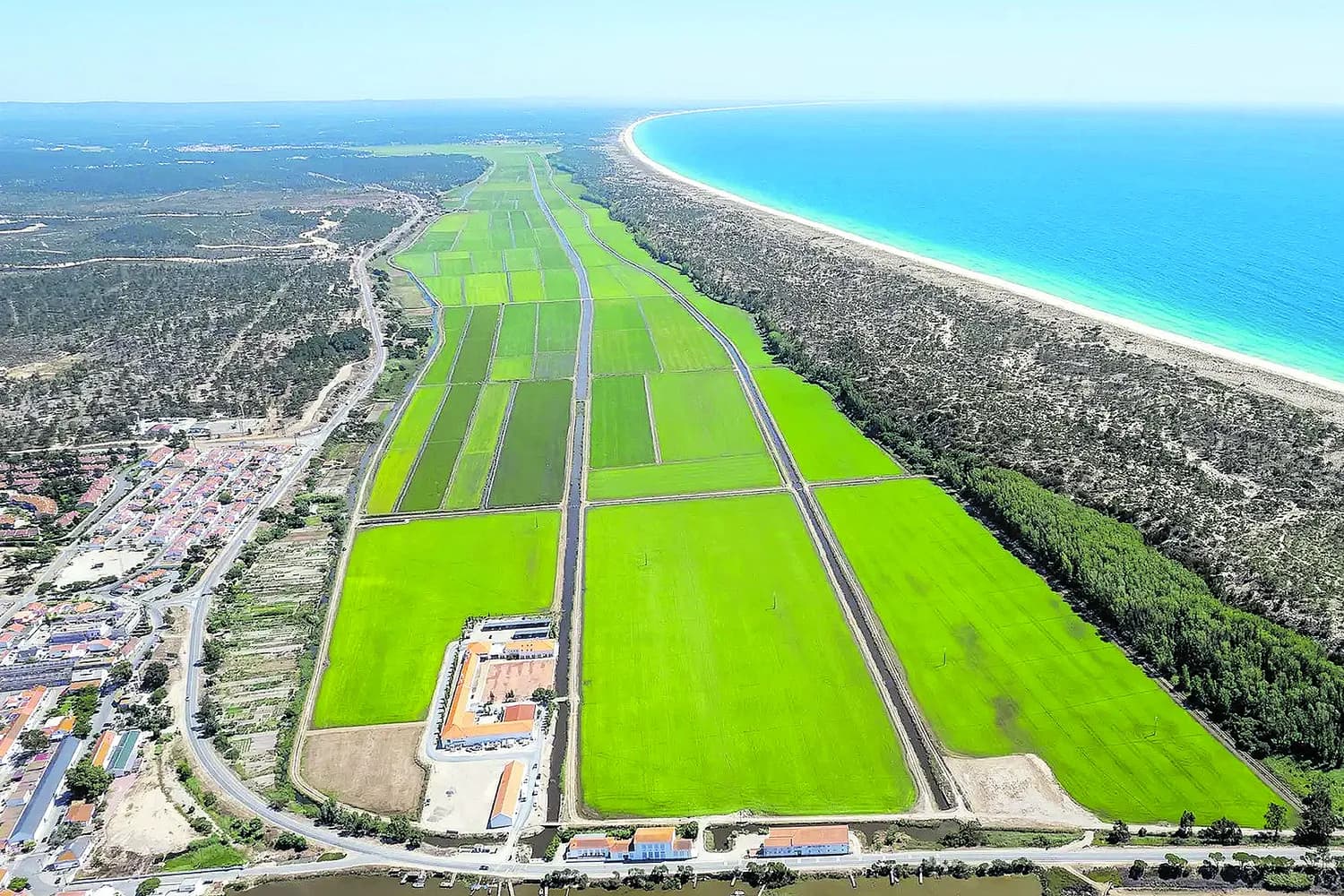
There is a place on the Portuguese coast where the wealthy come specifically to be invisible. No name badges at the beach club, no Porsche Cayennes in the valet queue, no Instagram-optimised pool bars. Just rice paddies, cork oaks, white-washed fishing cottages, and a stretch of Atlantic coastline so deliberately unhurried it feels almost confrontational. This is Comporta — and it has quietly become the most coveted address in European luxury travel.
The story of Comporta's rise is, in many ways, the story of what happens when the ultra-wealthy decide they are tired of being marketed to. The Algarve perfected resort luxury. The Riviera perfected glamour. Mykonos perfected spectacle. Comporta perfected the opposite of all three — and then charged accordingly.
Located roughly 90 minutes south of Lisbon on the Setúbal Peninsula, Comporta sits at the northern edge of the Alentejo coast — a stretch of Portugal that, until recently, was largely inaccessible to outsiders. No motorway, no airport, no cruise ship terminal. You had to mean it to get there. That friction, it turns out, was the product.
A Landscape That Does the Work
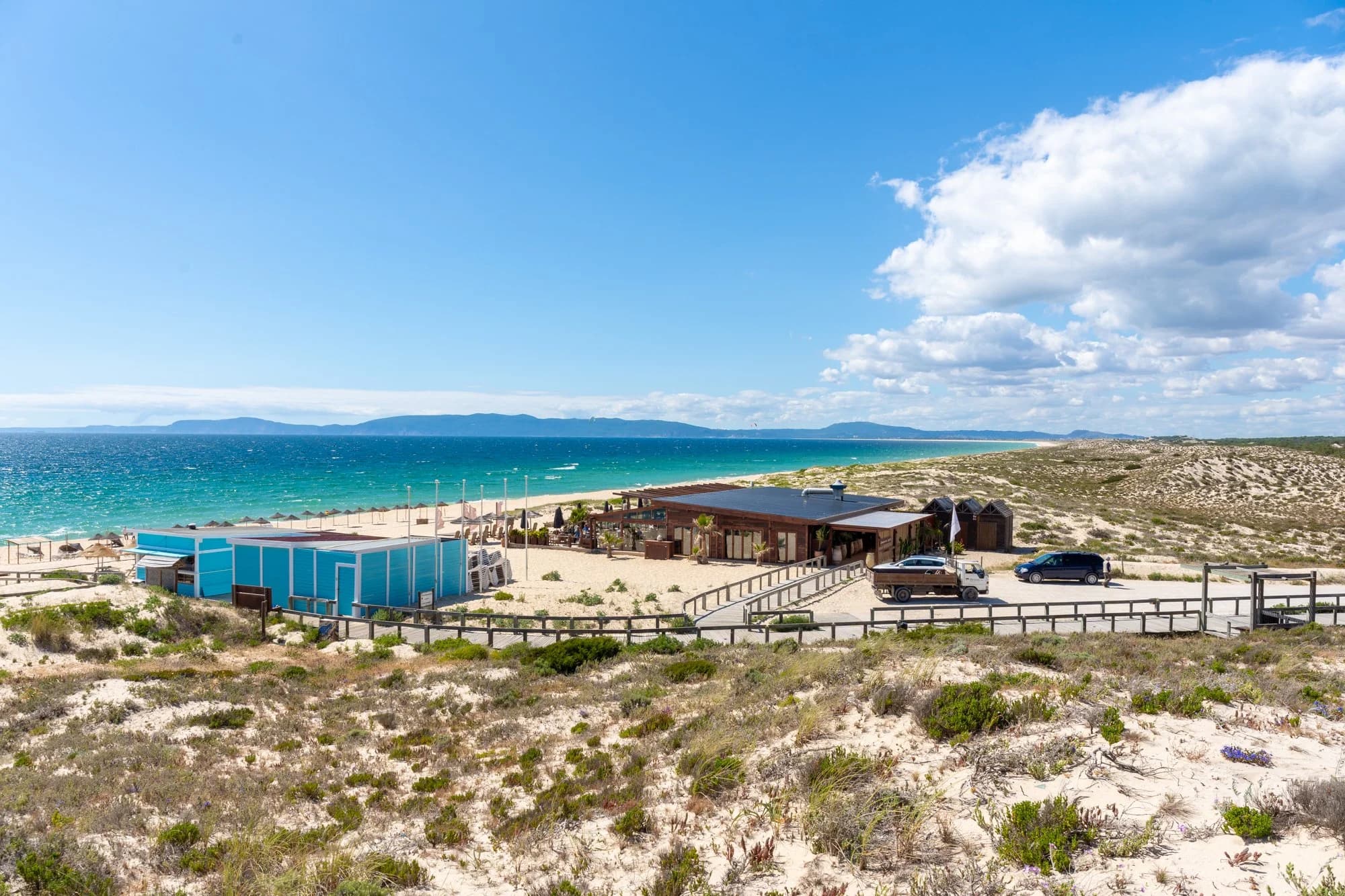
Comporta is not conventionally beautiful in the way that Positano is beautiful, or Santorini. There are no clifftop villages draped in bougainvillea, no postcard-ready harbours. What there is instead is something stranger and more compelling: an almost surreal flatness. Rice paddies that stretch to the horizon. Pine forests thick enough to block the wind. Dunes that rise suddenly from the coastal path, revealing a beach — Praia de Comporta — that runs for 60 kilometres without a single high-rise in sight.
That beach is the foundation on which everything is built. It is one of the longest undeveloped coastlines in Western Europe, protected in part by its distance from Lisbon and in part by strict planning regulations that have, so far, kept developers at arm's length. The result is a beach that feels genuinely wild — which, in 2025, is a luxury most coastlines can no longer offer.
"Comporta perfected the art of the understated. The cottages are immaculate. The service is invisible. The beach is endless. And none of it announces itself."
José Graça · PrimeStaysThe architecture follows the same logic. Traditional Comporta cottages — low, whitewashed, with thatched roofs and wooden shutters painted in faded blues and greens — have been renovated and reinterpreted by some of Europe's most thoughtful designers. The aesthetic is not minimalist in the cold, Scandinavian sense. It is something warmer: artisanal restraint, full of natural textures, handmade ceramics, and linen that has been washed too many times in the best possible way.
How Paris Discovered Comporta
The international chapter of Comporta's story begins, as many luxury travel stories do, with the French. In the early 2010s, a wave of Parisian creatives — architects, gallerists, fashion editors — discovered that you could fly to Lisbon, rent a car, drive south, and find something that felt like a secret. Properties were cheap. The food was extraordinary. And there were no other Parisians.
That, predictably, did not last. Within five years, Comporta had acquired a waiting list of people who wanted to rent the same cottages. Within ten, it had attracted serious capital — luxury villa developments that carefully mirrored the aesthetic of the originals, complete houses built from cork and adobe with outdoor showers and private pools hidden behind hedges of rosemary and lavender.
The critical detail is what Comporta did not become. It did not build a beach club with a DJ and a branded cocktail menu. It did not open a six-storey hotel with a rooftop bar. The local planning culture, combined with the aesthetic convictions of the first wave of buyers, created an informal covenant: Comporta would grow, but it would grow quietly. Anyone who violated that covenant would find themselves socially exiled from the community they had paid so much to join.
The Economics of Understatement
The phrase "quiet luxury" has been applied to so many things in recent years — a fashion aesthetic, a lifestyle trend, a Netflix documentary — that it risks losing all meaning. In Comporta, it means something specific and measurable. It means that the most expensive villa on the market will not have a gym or a cinema room. It will have a garden that smells of wild herbs, a pool that reflects the pine trees, and a kitchen designed for someone who actually cooks.
It means that the best restaurant in the area — and there are several that are genuinely exceptional — will have no website, a reservation system that operates entirely by phone, and a menu written on a chalkboard. It means that the beach bars, such as they are, will serve good wine and grilled fish and will close when the sun goes down, because the people who come here did not come for nightlife.
And it means, perhaps most importantly, that the price of entry is real. Comporta is not cheap. A well-positioned villa for a week in July will cost what a flight to New York costs. The expense, however, buys something that money cannot buy in more developed destinations: the genuine sensation that you have stepped away from the world rather than into a more expensive version of it.
"The best villas in Comporta do not announce themselves. They sit behind hedges of rosemary, their pools invisible from the road, their owners unknown to anyone who has not been invited."
José Graça · PrimeStaysThe Villas Worth Finding
The Comporta rental market divides cleanly into two categories. The first is the original farmhouse stock — traditional herdades and monte buildings that have been renovated with taste and restraint, usually by their Portuguese or French owners, and rented out for short periods. These properties have character that cannot be designed: thick walls, irregular floors, wooden beams stained dark by decades of wood smoke. They are not always perfectly comfortable. They are always memorable.
The second category is the purpose-built luxury villa — designed from the ground up in the Comporta aesthetic by architects who have studied the originals carefully. These properties offer the visual language of the farmhouse with the mechanical precision of a modern luxury hotel: heated pools, outdoor showers with pressure, kitchens equipped for serious cooking, bedrooms with blackout linen and silence. The best of them are indistinguishable from the originals to the untrained eye.
What both categories share is location. The most coveted properties sit within the pine forest, where the trees provide shade and privacy in equal measure, and where the walk to the beach is measured in minutes, not kilometres. The second tier sits in the rice paddy landscape — beautiful, but exposed, and hot in August in a way that requires commitment.
Why This Matters for Portugal
Comporta is not an isolated phenomenon. It is the clearest expression of something that has been happening to Portugal as a whole over the past decade: the country has positioned itself, almost accidentally, as the antidote to the excess of more established European luxury destinations.
Portugal offers what Italy offered twenty years ago and no longer can: the combination of genuine culture, outstanding food, extraordinary landscape, and relative scarcity — the sense that you are seeing something before everyone else does. That window is narrowing in Lisbon. In parts of the Algarve, it has already closed. In Comporta, it remains open, but only just.
The American market is arriving now, drawn by the same instinct that drove the French a decade ago: the recognition that somewhere new and serious has opened. The travel media has noticed. The luxury real estate market has noticed. The villa rental market has noticed. What has not yet happened — and this is the moment to understand — is the mass market discovery that will eventually make Comporta feel like everywhere else.
Until that happens, Comporta remains what it has always been: a place for people who know where to look, and who are willing to pay for the privilege of finding it before the crowd arrives. That is, in the end, the oldest definition of luxury there is.
every fortnight.
Editorial picks, honest notes, new destinations before they go mainstream.
Join the list