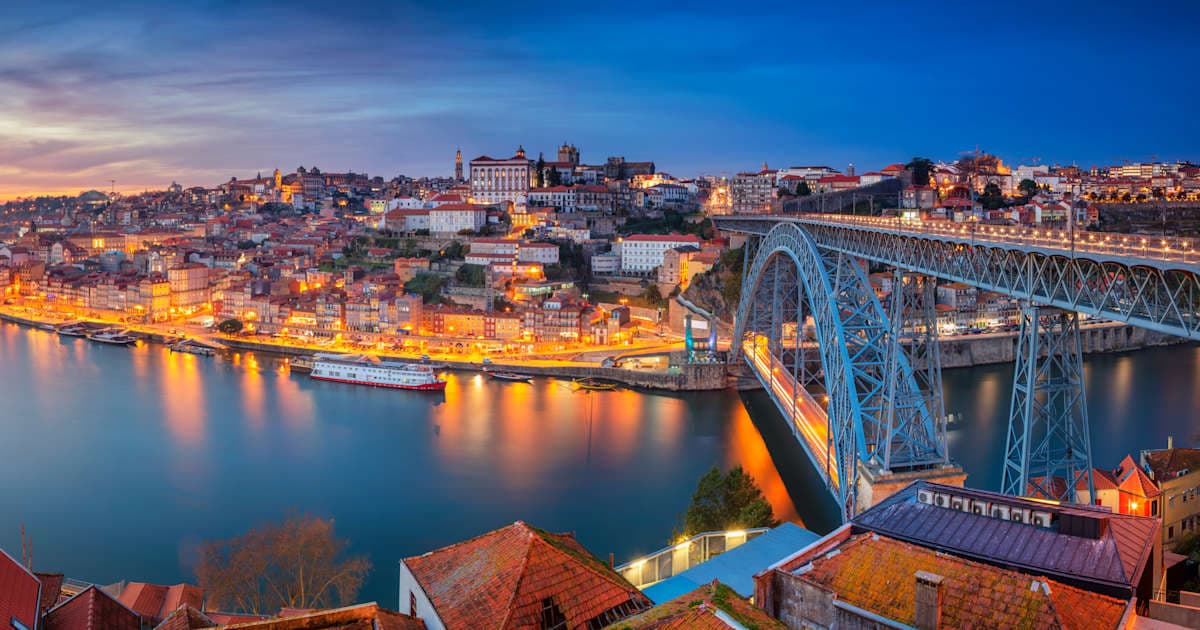
Porto is a city that does not need to sell itself. It is genuinely beautiful — hilly and layered, built of granite and azulejo, with a river frontage that faces south into the light and a wine culture that has shaped the city's architecture, economy, and identity for three centuries. It operates with a directness that visitors from more self-consciously charming European cities often find refreshing: Porto is what it is, it does not perform for you, and if you meet it on its own terms you will almost certainly want to come back.
Where to stay in Porto is a question worth thinking about carefully, because the city's geography — a series of steep hills dropping to the Douro river — means that neighbourhood choice shapes the entire experience. The wrong neighbourhood is not a disaster, but the right one can make Porto feel like a city you understand rather than one you are visiting.
This is an honest guide to the city's districts, the kinds of accommodation that actually suit different kinds of visitors, and how to read Porto correctly before you book.
What Porto Actually Is
Porto is Portugal's second city, with a metropolitan area of around 1.7 million people and a compact historic centre that is almost absurdly easy to navigate on foot once you accept that nothing is flat. The city sits on the north bank of the Douro river, roughly 5 kilometres from the Atlantic coast. Vila Nova de Gaia — technically a separate municipality — sits on the south bank and is where all the major Port wine lodges are located, connected to Porto by a series of bridges that are themselves architectural landmarks.
The historic centre — Ribeira, Miragaia, and the slopes above them — is a UNESCO World Heritage site. The area around the Bolhão market and the Clérigos tower is the commercial and cultural heart of the city. Foz do Douro, where the river meets the Atlantic, is where Porto's wealthier residents traditionally lived and where the most desirable residential properties are concentrated. Matosinhos, just north of Foz, is the city's best neighbourhood for seafood and an increasingly interesting area for accommodation.
The airport — Francisco Sá Carneiro — is 11 kilometres north of the centre and well-connected by metro (about 30 minutes to Aliados). Porto is small enough that almost everything worth doing is within walking distance of a good central location, which makes neighbourhood choice more about atmosphere than logistics.
"Porto does not perform for you. It is what it is — and if you meet it on its own terms, you will almost certainly want to come back."
José Graça · PrimeStaysWhere to Stay — District by District
The Ribeira is Porto's most photographed district and its most immediately legible — a waterfront of narrow streets, tileworked façades, and wine bars that face the Gaia lodges across the river. It is beautiful and occasionally overcrowded, but the crowds thin quickly as you move uphill into Miragaia and the streets become genuinely local again. Staying in this area means everything — the cathedral, the Livraria Lello, the Dom Luís bridge — is within a ten-minute walk. The accommodation tends toward boutique hotels and converted townhouses rather than large properties, which suits the scale of the streets.
The neighbourhoods east and west of the Aliados boulevard — Bonfim to the east, Cedofeita to the west — are where Porto has changed most visibly in the last decade. Both have been colonised by independent restaurants, concept stores, wine bars, and the kind of creative infrastructure that tends to follow affordable rents and genuine architecture rather than tourist fabrication. Staying here feels more local than Ribeira, with excellent food access and good connections to everything else. The accommodation is a mix of apartment rentals, small boutique properties, and a handful of well-designed hotels in converted buildings.
Foz is where the Douro meets the Atlantic, and it is a different city from Ribeira in almost every respect — wider streets, Atlantic light, a promenade along the coast, and the kind of residential calm that comes from being a neighbourhood where people actually live. The seafood in Matosinhos — just north of Foz — is the best in the Porto metropolitan area, and for visitors who want the city's cultural offer alongside ocean access and morning beach walks, staying in this area is the most rewarding choice. It requires either a car, a taxi, or the riverside walk along the Douro to reach the historic centre — about 40 minutes on foot along the water.
Gaia is technically not Porto, but its northern riverfront — the Cais de Gaia, lined with the wine lodges of Sandeman, Taylor's, Graham's, and the other major Port houses — is as much a part of the Porto experience as anything on the north bank. Staying in Gaia gives you Porto's skyline as a view rather than as your neighbourhood, which some visitors find more satisfying. The upper part of Gaia — above the wine lodges — is residential and quiet, with some interesting small properties. The cable car between the upper and lower parts is a useful shortcut to the riverfront.
How Long to Stay — and What to Combine
Three days is the minimum to do Porto justice. Five days, with a day trip or overnight to the Douro Valley, is the ideal northern Portugal visit. Seven days — Porto, two nights in the Douro Valley, and a day in Guimarães or Braga — is a complete northern Portugal week that leaves nothing significant untouched.
The day trip to the Douro Valley from Porto is one of the best single days you can spend in Portugal: two hours by car or three by the scenic train, arriving in Pinhão in time for a quinta lunch, an afternoon tasting, and the early evening drive or train back. For those who want more than a day, spending two nights at a quinta in the valley and returning to Porto for the flight home is the most satisfying itinerary for the northern circuit.
The Porto Worth Your Time
The Port wine cellars in Vila Nova de Gaia are not a tourist obligation — they are genuinely worth an afternoon. The major lodges — Taylor's, Graham's, Quinta do Crasto's Gaia facility, Ramos Pinto — offer tastings that range from entry-level orientation to serious verticals of aged Tawny and Vintage ports. The best tastings are not the cheapest, and the difference in quality between a €15 tour and a €45 curated tasting of aged Tawnies is significant. Book ahead for the better options.
The Livraria Lello — the neo-Gothic bookshop that has become one of the most photographed interiors in Europe — is worth seeing but needs context: it is now primarily a tourist attraction with entry tickets rather than a functioning independent bookshop. Go early, when it opens, or accept that you will be sharing it with several hundred other people at any other time of day.
The Serralves Museum in the western part of the city is one of the best contemporary art museums in Portugal, housed in a building by the Pritzker Prize-winning architect Álvaro Siza Vieira and set in exceptional gardens. It is consistently undervisited relative to its quality, which makes it a pleasure to spend two or three hours in without the crowds that attach themselves to more obviously touristic sites.
The food culture in Porto is serious and genuinely distinctive from Lisbon's. The tripas à moda do Porto — the tripe dish that gave the city's residents their nickname of tripeiros — is worth trying once in a traditional tasca. The francesinha — a sandwich of cured meat and sausage, covered in melted cheese and a beer-and-tomato sauce — is the city's most famous dish and an extraordinary thing to eat at midnight after a considerable amount of Port wine. The seafood in Matosinhos is the best reason to make the trip to the coast, with restaurants so focused on the quality of the product that decoration is considered secondary to the grill.
"The Douro Valley seen from Porto is a destination. The Douro Valley stayed in is a different experience entirely — the one worth having if you have the time."
José Graça · PrimeStaysPorto + Douro Valley — The Complete Northern Circuit
Porto is the natural gateway to the Douro Valley, and the two together make one of the most satisfying one-week itineraries in Portugal. The city and the valley are genuinely complementary — Porto is urban, dense, culturally intense; the Douro is silent, agricultural, and built around a slower relationship with time and landscape. The transition between them, whether by the scenic railway or by the river road, is part of the experience.
The ideal northern circuit: arrive in Porto, spend two full days in the city, take the morning train to Pinhão on day three, spend two nights at a quinta in the Cima Corgo, drive back to Porto on day five along the river road stopping at Régua and the Museu do Douro, and fly home from Porto on day six or seven. This gives both destinations the time they deserve and avoids the compression that makes one-day Douro trips feel like a postcard rather than a place.
every fortnight.
Editorial picks, honest notes, new destinations before they go mainstream. Free, always.
Join the list