September is the best month to visit Portugal. That is an opinion, but it is one held consistently by anyone who has spent serious time in this country across different seasons — tour operators, hotel managers, photographers, and the returning visitors who, having made the mistake of going in August, quietly book their next trip for September and never go back to peak season. The reasons are structural and they compound: better weather by most measures, warmer sea, lower prices, fewer people, and a version of Portugal that has the space to be itself again.
The mistake people make about Portuguese seasonality is treating it as a binary between summer and winter. The reality is more nuanced. June is good — warm enough, not yet overrun. July and August are viable for the right kind of visitor in the right location, but they require careful calibration: the right villa, the right region, acceptance of peak prices and summer crowds. September is none of those things. September is generous.
What follows is a region-by-region account of what September specifically means — not a generic claim that the weather is nice, but a specific argument for what each part of Portugal offers in this month that it cannot offer in any other.
The Case for September — The Numbers
The sea temperature argument is the one that surprises people most. The Atlantic off the Portuguese coast follows a heat accumulation pattern: it absorbs heat slowly through the summer and peaks in September. On the Alentejo coast and the Algarve, surface temperatures reach 20–22°C in September — warmer than June by 3–4 degrees. The Atlantic beaches of the Silver Coast and the west Algarve, which are cooler than the south-facing coastline, reach 18–20°C. The Algarve's sheltered south-facing beaches reach 23–25°C. None of these numbers are available in June.
Crowd levels drop sharply after the first week of September, when European school holidays end. The Algarve retains some volume through mid-September — it draws significant post-summer traffic from British and German visitors — but it is measurably quieter than August. The Alentejo coast, Lisbon, the Douro Valley and the north are already genuinely quiet by the second week of September. By the end of the month, most of Portugal feels like a different country from the one that exists in August.
Villa prices follow the crowd curve with a short lag. Expect 20–35% reductions on August rates from the first of September. Flights from London and New York are considerably cheaper — often 30–40% below peak — from the first full week of the month. The combination of lower accommodation cost, cheaper flights and a better quality of experience is not a marginal improvement. It is a fundamentally different proposition.
The Algarve in September
The Algarve is the region that benefits most visibly from September. The south-facing coastline — from Sagres to Tavira — retains the summer heat with unusual efficiency, and the sea in September is genuinely warm: 23–25°C on the sheltered beaches of the central and eastern Algarve. The beach experience in September is, by most measures, better than August: the same sun, the same sea, fewer people, and restaurants that have recovered from the summer freneticism and are cooking better food with more attention.
The western Algarve — Lagos, Sagres, the Costa Vicentina — cools slightly faster than the south-facing coast but is already quieter in September and benefits from that quiet in a way the central Algarve does not. Tavira and the eastern Algarve, by the second week of September, are as close to their natural character as they get during any warm month. The barrier islands — Ilha de Tavira, Ilha de Cabanas — are accessible without the summer boat queues.
Same sun, same sea — warmer sea, actually — at 20–35% lower villa prices with significantly reduced crowds from the second week onwards. The eastern Algarve around Tavira is the standout: the barrier island beaches empty noticeably, the town reverts to being Portuguese, and the Ria Formosa is at its most beautiful. The central Algarve retains some volume through mid-September but recovers fully by month's end.
The Alentejo Coast in September
The Alentejo coast — Comporta, Melides, Tróia, Vila Nova de Milfontes — has a specific relationship with September that is different from anywhere else in Portugal. The Atlantic water here, which in June is still cold enough to discourage casual swimming, has spent the summer accumulating heat and arrives at September at 20–22°C: genuinely swimmable, genuinely warm, on the same wild beaches that were too cold for most visitors in spring.
The social atmosphere of Comporta in August — which some find energising and others find incompatible with the Alentejo coast's appeal — disappears almost entirely in September. What remains is the landscape, the light, and a pace of life that is the entire reason the place acquired a reputation. Melides in September is particularly strong: the beach is warm enough, the village is genuinely quiet, and the pine forest has a quality in the September light that it does not have in the harsh brightness of August.
"The Alentejo coast in September is what people imagine it to be in August — before they arrive and find it busier and more expensive than expected."
José Graça · PrimeStaysThe sea is finally warm enough for comfortable swimming. The August visitors are gone. The pine forest light in September is extraordinary. Villa prices drop 25–35% from August peak. This is the month the Alentejo coast was made for — and the one that most people, fixated on August, miss entirely.
The Douro Valley in September — The Harvest
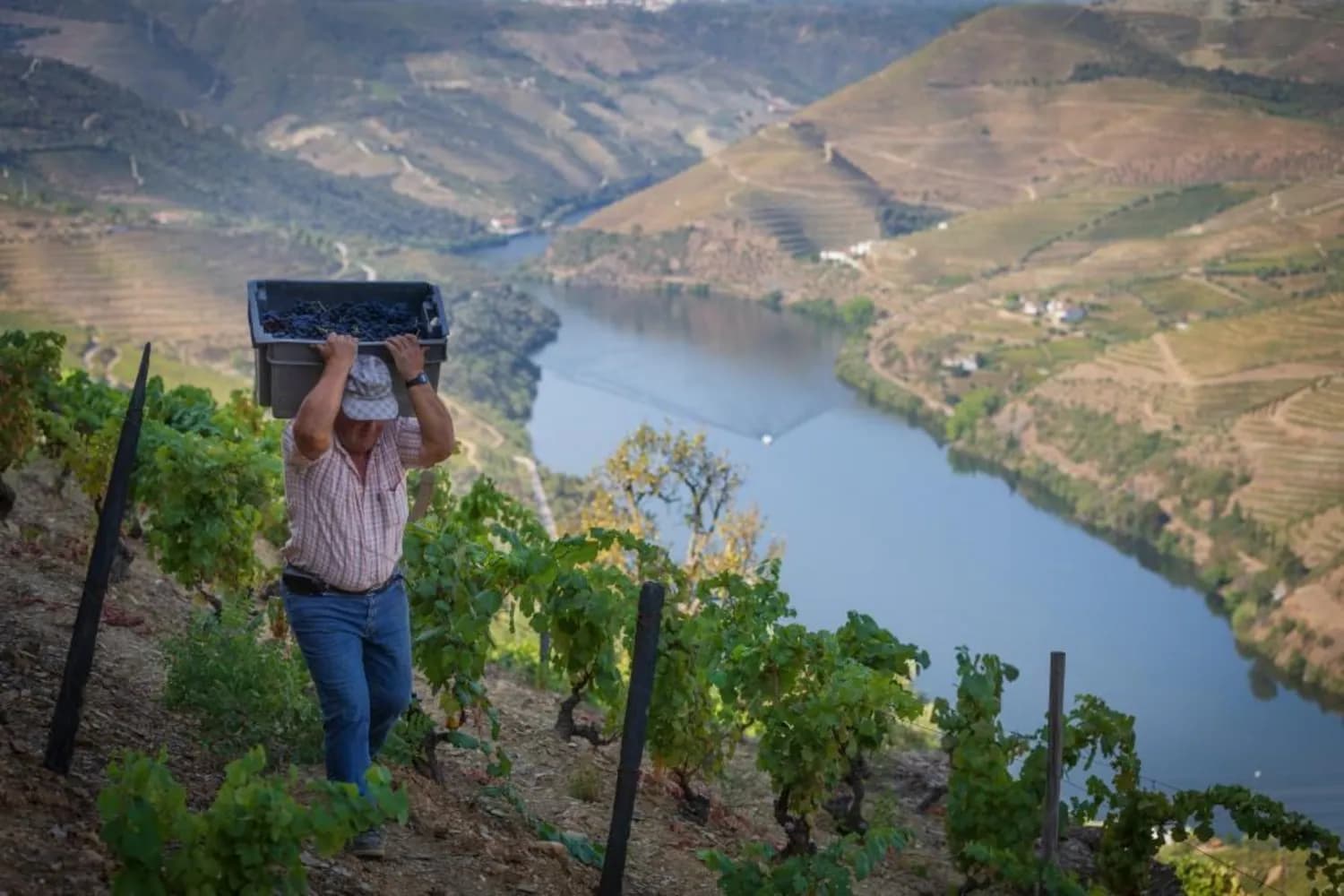
The Douro Valley in September is one of those places that makes the case for travel in a way that photographs cannot fully capture. The harvest — the vindima — begins in mid-September and runs for two to three weeks, and it transforms the valley entirely. The terraces, which are green through the summer, turn gold and amber. The quintas are working at full capacity. The air smells of fermenting must. There is a particular quality of activity in the valley during the harvest — purposeful, seasonal, rooted — that has become increasingly rare in Europe and that, experienced directly, is genuinely moving.
This is not a spectator sport — or not only that. Several quintas receive visitors during the harvest, some offering the opportunity to participate in the treading, others simply opening their doors for tastings and cellar tours while the winemaking is underway. Douro Valley harvest tours and quinta visits can be booked through Viator — the guided harvest experiences book up quickly, and September availability is genuinely limited. Book early.
The logistics of the Douro in September: Porto is the base for most visitors, and the drive up the valley takes 90 minutes to two hours depending on the destination quinta. River cruises on the Douro are available and offer a different perspective on the terraces — the scale of the valley is always a surprise to first-time visitors, and the boat reveals it in a way that the road does not. The evenings in September in the Douro cool quickly — bring a layer for dinner outdoors.
Mid-September to early October, the Douro Valley undergoes the most visually and atmospherically dramatic transformation in Portugal. Golden terraces, working quintas, the smell of fermenting must. Several properties offer harvest participation. River cruises reveal the valley's true scale. Book quinta visits in advance — demand for September harvest experiences has grown significantly in the past three years.
Lisbon and Porto in September
Both cities are significantly more liveable in September than in July and August. The temperatures — which in Lisbon can reach 35–38°C in the height of summer, hot enough to make the city genuinely uncomfortable — drop to a more reasonable 24–28°C in September, with cooler evenings that make outdoor dining and neighbourhood walking pleasant again. The crowds thin from the third week of August, and by September the queues at the obvious tourist sites — the Mosteiro dos Jerónimos, the Museu Nacional do Azulejo, the Livraria Lello in Porto — are manageable rather than prohibitive.
Lisbon's food scene, which operates at a higher level than it ever has, benefits from September in a specific way: August is the month when half of Lisbon goes on holiday and a significant number of restaurants close. September is when they come back, and the service reflects it. Porto in September has the particular quality of a city that has exhaled after a long summer — the students have not yet returned in force, the tourist volume has eased, and the city has some room to breathe. The light on the Douro from the Ribeira in September at five o'clock in the afternoon is worth the trip alone.
How to Plan a September Trip to Portugal
The practical implications of September's position in the calendar are worth addressing directly. School holidays across most of Europe end in the last week of August. The first week of September still sees residual summer volume — particularly in the Algarve and Lisbon — but the second week is noticeably different. If flexibility exists, book from the 8th of September onwards to capture the full benefit of reduced crowds and prices without sacrificing weather.
Villa availability in September is generally good, but the best properties — particularly in the Alentejo coast and the Douro Valley — book up from July. If September is the target month, search and book in early summer rather than leaving it until August. The gap between the best September villa and the best available September villa is larger than it appears from a late-booking position.
Flights from London to Lisbon, Porto and Faro are significantly cheaper in September than August — sometimes by 40–50% on the same routes. The combination of cheaper flights, reduced villa rates and a better experience makes September the most efficient month for Portuguese travel by most measures that matter.
If September is the month that finally prompts a first trip to Portugal, the question of which country — Portugal or Greece — is one that comes up regularly. September is the month that most clearly resolves it in Portugal's favour: the sea is warm, the crowds are manageable, and the harvest in the Douro is something Greece has no equivalent of.
every fortnight.
Editorial picks, honest notes, new destinations before they go mainstream. Free, always.
Join the list