Melides is what Comporta was ten years ago. That is not a metaphor — it is a description of a specific condition that certain coastal places pass through, usually only once, before infrastructure, reputation and price conspire to change them permanently. The condition is this: a place of genuine quality that the right people have found but the wrong people have not yet discovered. Melides is in that window. The window will not stay open indefinitely.
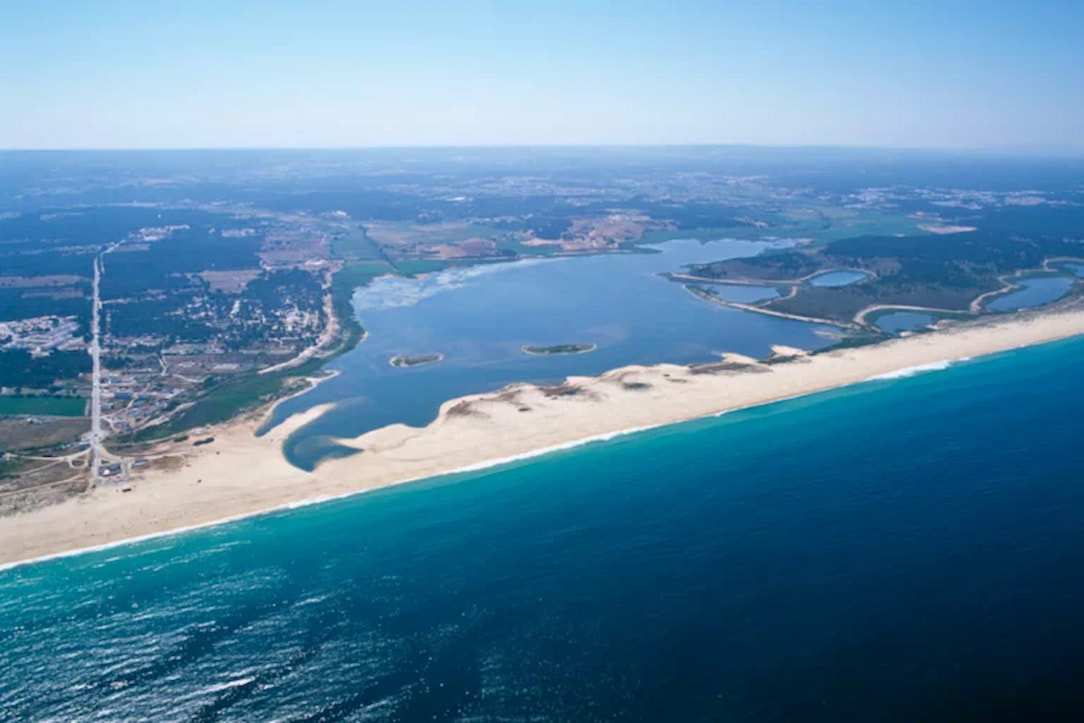
The village sits in the Grândola municipality of the Alentejo, roughly 120 kilometres south of Lisbon. Behind it is a lagoon — the Lagoa de Melides — flanked by cork oak and maritime pine. In front of it, across a narrow strip of dunes, is an Atlantic beach that runs for kilometres in either direction without a beach bar, a sun lounger, or a car in sight. This is not an accident. It is a consequence of the Alentejo Litoral Natural Park protections that have kept this stretch of coast from developing in the way the Algarve and even parts of Comporta eventually did.
Those protections are why Melides feels the way it does. They are also, for a certain kind of traveller, the entire point.
The Atlantic Side — and Why It Matters
The Praia de Melides is a long, exposed Atlantic beach — the kind that belongs to a different category from anything you find further south. The water is cooler than the Algarve. The waves are real. The sand stretches in both directions until it disappears, and there is nothing on it: no infrastructure, no services, no crowds in any meaningful sense even in August. This is unusual enough in coastal Europe in 2026 to be worth stating plainly.
The beach is not the easiest to reach. There is no road to it — access is on foot or by mountain bike across the dunes, which takes between fifteen and twenty-five minutes depending on where you are staying. This is not a flaw. It is a filter. The families with young children who need a beach restaurant nearby will choose Comporta or the Algarve. The people who walk through the dunes and arrive at that beach tend to be exactly the kind of people who should be there.
"Melides has the rarest thing in coastal Portugal right now — a beach that nobody has made convenient. That inconvenience is its greatest asset."
José Graça · PrimeStaysThe lagoon side is a different experience entirely. Calm, warm, shallow, and bordered by pine and oak — it is where locals swim in the afternoon when the Atlantic wind picks up. The Lagoa de Melides is technically a bathing beach, consistently clean, and very beautiful in a way that is difficult to photograph: the kind of still, reflective light that changes completely between morning and evening.
Two entirely different swimming experiences within walking distance of each other. The Atlantic beach — exposed, uncrowded, accessible only on foot — for those who want space and wave. The lagoon — warm, calm, sheltered by pine forest — for afternoons when the wind picks up. Neither has been made convenient. That is the point.
Where to Stay in Melides
Melides is overwhelmingly a villa destination. There are no hotels to speak of — a couple of rural tourism properties on the periphery, and that is all. The accommodation offer is made up almost entirely of private houses: some in the village itself, most in the pine forest between the village and the lagoon, a few on working agricultural estates in the surrounding countryside.
The properties worth renting tend to share certain characteristics: generous outdoor space, a private pool, serious attention to materials and design, and a relationship with the landscape rather than an imposition on it. The best ones feel as if they were built for someone to live in, not to photograph. That distinction matters more than it might seem — a house designed for living tends to work in a way that a house designed for Instagram does not.
Prices have risen significantly in the past three years but remain lower than equivalent properties in Comporta. A well-appointed villa sleeping six, with a private pool and reasonable proximity to either the lagoon or the beach access, typically costs €250–450 per night in June or September. In July and August expect €350–600. These numbers will not hold indefinitely.
Prioritise properties in the pine forest zone between the village and the lagoon — they offer the best combination of quiet, shade, and proximity to both water options. Check the distance to the dune access point carefully: fifteen minutes on foot is acceptable, thirty-five is a different proposition in August heat. A private pool is not optional in July and August.
Food, Wine and What to Actually Do
The food situation in Melides is honest about what the village is. There are two or three restaurants in the village centre — simple, locally focused, cooking with good ingredients without pretension. There is a small market. There is no fine dining, no beach club, no tasting menu. If that is what you need, you are staying in the wrong place.
What there is: the Alentejo wine region is your backyard. The plains east of Melides produce some of the most interesting red wines in Portugal, and there are growers within forty minutes who will receive you without an appointment if you call ahead. This is a genuinely different experience from touring a winery in Napa or Burgundy: the scale is human, the producers are accessible, and the wines are not yet priced at their international reputation.
Setúbal is forty-five minutes north and has a proper fish market. Grândola is twenty minutes east and has everything you need for a week's self-catering. The birding in and around the lagoon is exceptional. The Sado estuary — home to one of the only resident populations of bottlenose dolphins in Europe — is an hour north. Boat trips and wildlife tours on the Sado are bookable through Viator — the flamingo-watching and dolphin tours are particularly well-reviewed and genuinely worth the drive.
Melides vs Comporta —
The Honest Answer
They are twenty-five kilometres apart and serve meaningfully different purposes. Comporta has restaurants worth travelling for, a small design and fashion scene, boutique accommodation of real quality, and a social atmosphere in July and August that some people enjoy and others find incompatible with the idea of the Alentejo coast. Melides has almost none of that.
The question of which is better is the wrong question. The right question is: what are you actually going for? If you want excellent food nearby, a hotel option, and some guaranteed social energy, Comporta is the correct choice. If you want a house in pine forest, a wild beach twenty minutes on foot, Alentejo wine, and three days where almost nothing happens — Melides is correct.
"Comporta is Melides with more restaurants and higher prices. Melides is Comporta before Comporta became Comporta. Choose accordingly."
José Graça · PrimeStaysThere is a version of Melides that will not exist in five years. The properties being built now at the edges of the village are not small. The names attached to some of the design projects under development are not obscure. The trajectory is clear. The people who come to Melides now are arriving at the right moment — not because they are early in any fashionable sense, but because the place still works the way it was always meant to.
When to Go — and When Not To
June is the correct answer for most travellers. Water temperatures on this stretch of coast run 17–19°C in June — cooler than the Algarve but manageable on an Atlantic beach where you expect the water to have some character. The days are long, the light is extraordinary, and the crowds that arrive in July have not yet appeared.
September is equally strong and, for the Atlantic beach specifically, sometimes superior. The water has had the summer to warm up — surface temperatures reach 20–21°C in September — and the crowds have gone. The Alentejo interior in September begins to show the first hints of autumn colour, and the rhythm of the village shifts perceptibly. It is a better month than most people realise.
July and August are viable. The village is busier by its own standards, villa prices peak, and the weekend dynamic changes. It is still not the Algarve — but it is no longer the Melides of May or October. Come in the shoulder months if you have any flexibility.
every fortnight.
Editorial picks, honest notes, new destinations before they go mainstream. Free, always.
Join the list