Every year, the serious traveller faces the same calculation: where in Europe offers the combination of quality, authenticity, value and relative freedom from the crowds that have made the obvious destinations less interesting than they used to be? In 2026, that answer is clearer than it has ever been. Portugal has quietly assembled every ingredient of a great luxury travel destination — and has not yet paid the price that assembly usually commands.
This is not a promotional claim. It is an editorial observation from people who live here, know the market intimately, and have watched the international travel press reach the same conclusion with increasing conviction over the past three years. The question is not whether Portugal deserves its moment. It is whether you will arrive before the moment fully arrives.
A private villa with pool in the Algarve or Comporta costs meaningfully less than its equivalent in Tuscany, Mykonos or the South of France. The restaurants are less expensive. The wines are world-class and significantly underpriced compared to French or Italian equivalents. For the luxury traveller who has become accustomed to paying the premium attached to branded destinations, Portugal is a consistent, pleasant shock.
Portuguese cuisine has spent years being one of Europe's best-kept secrets. That is changing. Lisbon has more Michelin-starred restaurants per capita than most European capitals, and the quality extends far beyond fine dining — the seafood at a modest tasca in the Algarve frequently outperforms the premium seafood restaurants of other European coastal destinations. The wine scene — Douro, Alentejo, Vinho Verde — is producing bottles that compete globally at a fraction of the international price.
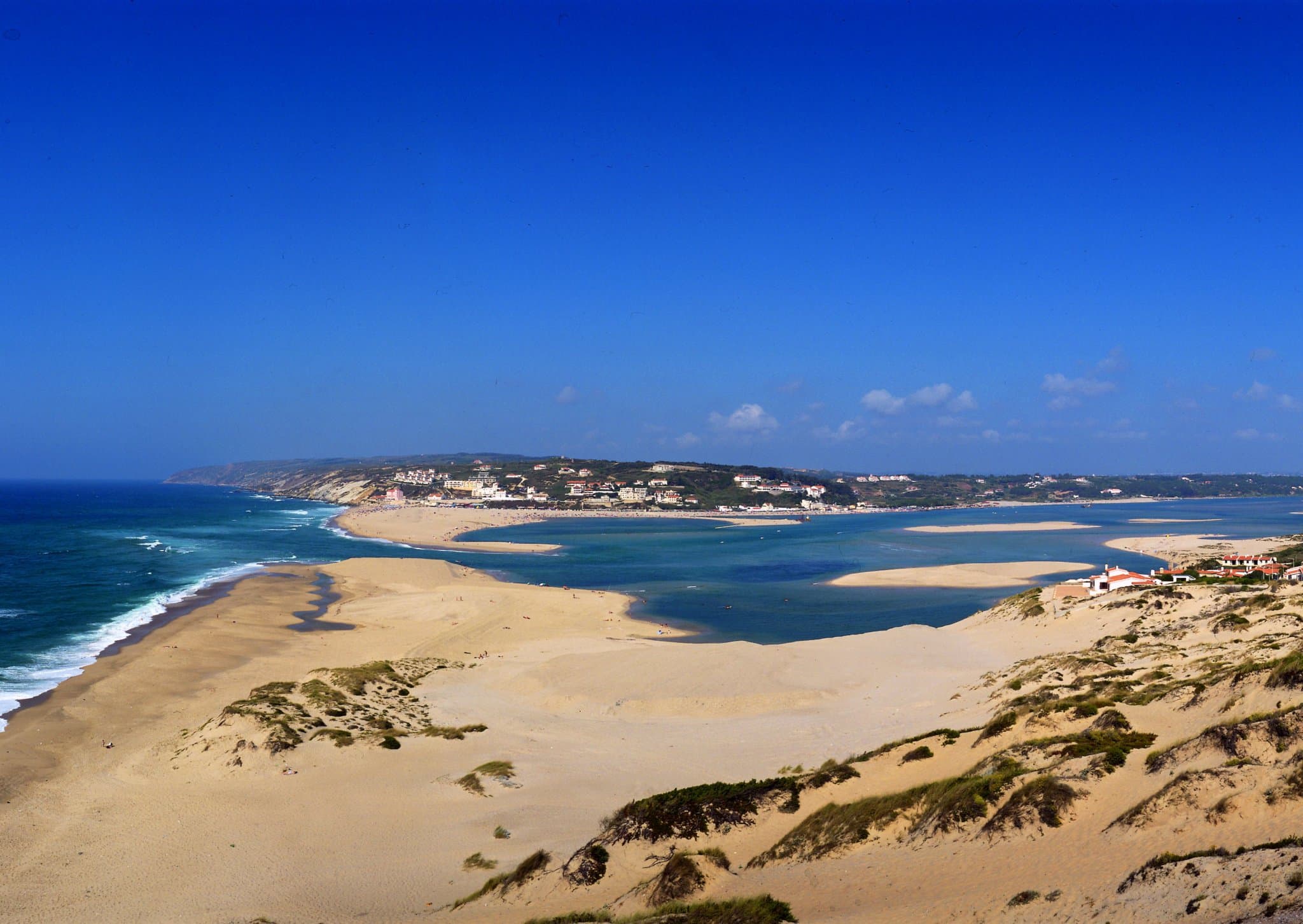
From the dramatic Atlantic surf beaches of the Silver Coast and the wild Alentejo coast, to the sheltered clifftop coves of the western Algarve and the Ria Formosa lagoon system of the east — Portugal has more distinct coastal experiences than any comparably sized country in Europe. And unlike the Mediterranean coasts that have been fully developed for tourism, significant stretches of the Portuguese coast remain genuinely undeveloped.
Santorini in August is functionally inaccessible. The Amalfi Coast requires military-level advance booking. Provence in peak season has become an exercise in crowd management. Portugal, by contrast, still has destinations — Comporta, Tavira, the Costa Alentejana, the Silver Coast — where the experience of being in a beautiful place is not dominated by other people having the same idea. That window will not stay open indefinitely.
Over 300 days of sunshine per year in the south. Mild winters in Lisbon and the Algarve that make year-round visits practical. The Atlantic influence keeps summers from becoming oppressive in the way that inland Mediterranean destinations do in July and August. And the shoulder seasons — May, June, September and October — offer the best weather in Europe at the time of year when the rest of the continent is either too cold or too hot.
A decade ago, the Portuguese private villa rental market was good in the Algarve and thin everywhere else. Today, every major region — Comporta, the Silver Coast, the Costa Alentejana, Lisbon, Cascais, Sintra, Estoril, the Douro Valley — has a villa stock that includes genuinely exceptional properties: architecturally interesting, well-managed, with the infrastructure (pools, outdoor kitchens, reliable Wi-Fi) that the contemporary luxury traveller requires.
Eight centuries of maritime empire. The first global trade network. A literary tradition that produced Fernando Pessoa and José Saramago. Fado — one of the few living UNESCO-recognised music traditions in Europe. The azulejo tradition that covers the facades of Portuguese cities in one of the most distinctive visual languages in world architecture. Portugal is a country with an extraordinary cultural depth that its relatively modest international profile entirely fails to reflect.
The American luxury travel market has discovered Portugal. The British market, which has been coming for decades, is deepening its engagement. The international press — from the New York Times to Condé Nast Traveler — has been consistent in its endorsement. The prices have begun to respond, but slowly and unevenly. In 2026, it is still possible to experience Portugal at a quality-to-price ratio that the destination's profile does not yet command. That gap is closing.
The Right Destination for the Right Traveller
Portugal's variety means the choice of destination matters as much as the choice of country. Each region offers a distinct version of what Portugal can be — and choosing the wrong one for your style of travel means missing what makes the country exceptional.
For the traveller who wants quiet luxury without spectacle: Comporta and the Costa Alentejana. Pine forests, Atlantic dunes, no branded beach clubs. The most sophisticated address in Portuguese luxury travel, and still within the window of relative discovery.
For the traveller who wants the complete package: The Algarve. World-class golf, exceptional villa inventory, dramatic coastline, and the service infrastructure that other Portuguese regions are still building. The western Algarve for resort luxury; Tavira and the east for something more authentic and interesting.
For the traveller who wants value without compromise: The Silver Coast. The most underrated coastline in Portugal — rawer than the Algarve, less hyped than Comporta, and 30-40% cheaper than either for comparable accommodation.
For the traveller who wants culture and city: Lisbon and the surrounding region. One of Europe's most compelling capitals, with Cascais, Sintra and Estoril within easy reach, and Comporta two hours to the south.
For the traveller who wants wine and landscape: The Douro Valley in September. The harvest, the quintas, the terraced vineyards dropping to the river — one of the great European travel experiences that has not yet been fully discovered by the international luxury market.
"Portugal in 2026 is what Tuscany was in 1995, what Provence was in 1985 — a destination on the right side of discovery, where the gap between quality and price has not yet closed."
PrimeStays EditorialThe Honest Caveat
Portugal is not without its challenges. Lisbon has become expensive by Portuguese standards, and the Algarve's most famous resort addresses — Quinta do Lago, Vale do Lobo — are now priced at international luxury levels. The infrastructure in some regions — particularly roads, internet connectivity and the healthcare system — does not yet match the ambitions of the tourism product. And the speed of development in previously undiscovered areas like Comporta and Melides means that the window of experiencing them before full commercial discovery is shorter than many people realise.
None of these caveats outweigh the fundamental proposition. Portugal in 2026 remains the most compelling luxury travel destination in Europe for the traveller who has done their research — which is precisely the traveller this editorial is written for.
every fortnight.
Editorial picks, honest notes, new destinations before they go mainstream.
Join the list